


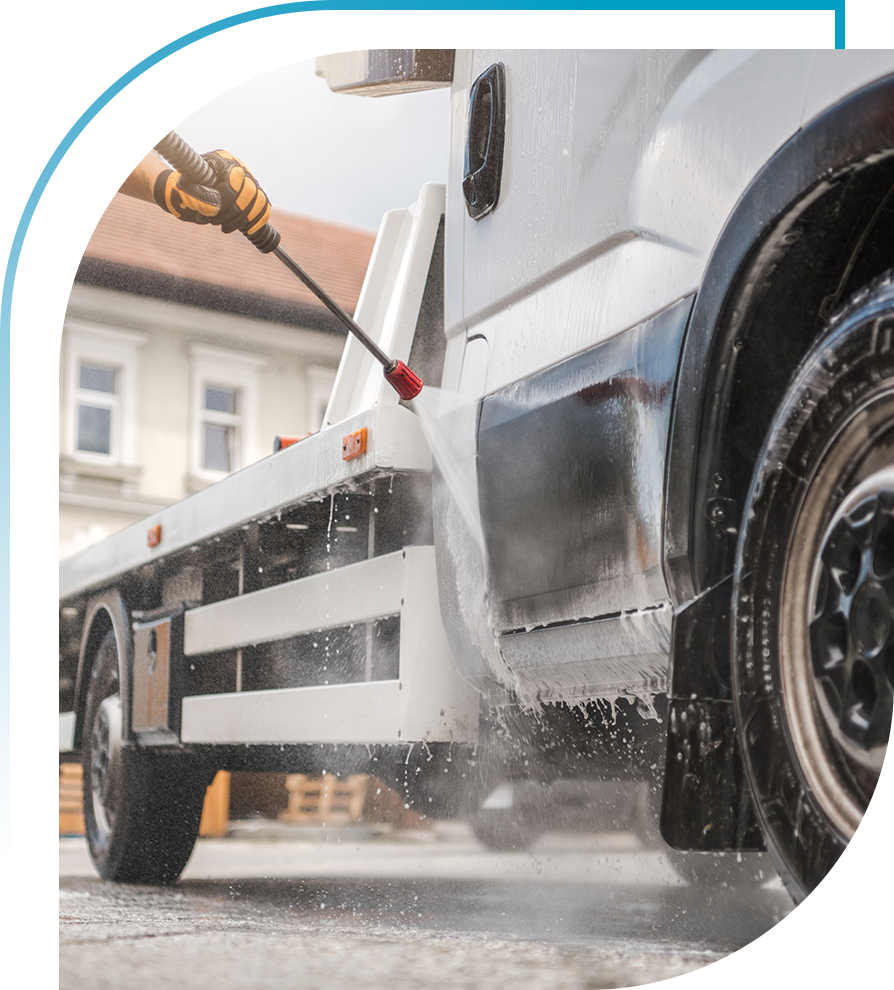
Seasonal Challenges in Fleet Maintenance
Fleet maintenance strategies often change with the seasons, but cleaning practices are frequently treated as a constant. In reality, weather conditions dramatically affect how contaminants build up on commercial vehicles and how quickly damage can occur. Understanding seasonal washing needs helps fleets reduce wear, maintain safety, and avoid preventable maintenance issues throughout the year.
Winter: The Hidden Cost of Road Salt
Winter presents one of the most damaging environments for commercial trucks. Road salt, de-icing chemicals, and slush accumulate rapidly on undercarriages, frames, and wheel assemblies. While these substances improve road safety, they are highly corrosive and can cause long-term damage if not removed regularly.
Salt buildup accelerates rust formation, weakens metal components, and compromises fasteners and joints. Washing focused only on visible surfaces often misses the undercarriage, where the most severe corrosion occurs. Regular, targeted cleaning during winter months is essential to slow structural deterioration and prevent premature part failure.
Spring: Residue and Recovery
As winter ends, many fleets focus on restoring vehicles that endured months of harsh conditions. Spring runoff brings mud, grit, and leftover chemical residue that clings to vehicle surfaces and cooling systems.
This period is critical for deep cleaning. Removing residual contaminants allows maintenance teams to assess winter damage accurately. Spring washing also prevents abrasive particles from continuing to wear down moving components and painted surfaces during warmer months.
Summer: Dust, Bugs, and Heat Exposure
Summer introduces a different set of challenges. Dry conditions increase dust accumulation, while long-haul routes lead to heavy insect buildup on windshields, grilles, and radiators. These deposits are more than cosmetic—they can restrict airflow and reduce cooling efficiency.
Heat amplifies the effects of grime. Oils and residues bake onto surfaces, becoming harder to remove over time. Regular washing during summer helps prevent buildup from hardening and ensures engines and cooling systems operate efficiently under high-temperature conditions.
Fall: Organic Debris and Moisture Traps
Autumn brings leaves, pollen, and organic debris that often lodge in vents, seams, and undercarriage areas. Combined with increased moisture, this debris can trap water against metal surfaces, creating ideal conditions for corrosion.
Fall washing prepares fleets for winter by clearing debris before it combines with snow and salt. This preventative step reduces the compounding effects of seasonal contaminants and improves overall vehicle readiness.
Adjusting Wash Frequency by Season
One common mistake fleets make is maintaining the same wash schedule year-round. Seasonal conditions demand flexibility. Increased washing frequency during winter and transitional seasons often results in lower repair costs and longer asset life.
Wash processes may also change seasonally, emphasizing undercarriage cleaning in winter, residue removal in spring, airflow clearance in summer, and debris removal in fall.
Long-Term Benefits of Seasonal Awareness
By aligning wash practices with environmental conditions, fleets gain better control over maintenance costs and vehicle reliability. Seasonal washing reduces corrosion risk, improves inspection accuracy, and supports consistent vehicle performance regardless of climate.
For operators evaluating Truck Wash Equipment, understanding how systems support seasonal cleaning needs helps ensure vehicles are protected year-round. When wash strategies adapt to weather conditions, fleets are better equipped to manage both immediate challenges and long-term asset health.
